

About Hobi
Founded in 2018, Hobi is a Canada-based technology company building intelligent learning tools through thoughtful hardware design and behavioral science.

Hobi designs and develops intelligent learning tools that help people focus, learn, and grow in everyday environments.
We combine in-house hardware development, embedded systems engineering,
and practical product design to create reliable, purpose-driven devices.
From early concept and prototyping to testing, manufacturing, and long-term support,
we stay deeply involved in every stage of the product lifecycle to ensure quality, usability, and durability.
We believe better learning tools should be simple, focused, and built around real human behavior.
Many existing products add unnecessary complexity or distractions.
At Hobi, we design with intention — removing friction,
improving focus, and helping users build better habits through well-designed hardware.
Global Customers
Across multiple international markets
Devices Shipped
Designed, tested, and manufactured by our team
Customer Satisfaction
Based on post-purchase user feedback
A small, engineering-driven team building products end to end.

Ethan Morris
Founder & CEO
Founder of Hobi and an IoT embedded systems engineer. Leads product vision, global strategy, and hands-on development of intelligent learning tools.
Olivia Collins
Head of Product & Hardware Engineering
Leads hardware architecture, low-power design, and manufacturing optimization, ensuring products are reliable, scalable, and production-ready for global markets.
Jason Porter
Head of Software & Cloud Systems
Oversees firmware, cloud connectivity, and device security, focusing on stable OTA updates, and long-term lifecycle management of connected devices.
Sophia Sinclair
Head of Brand & Global Operations
Manages brand strategy and international operations, aligning user experience, logistics, and customer support across diverse global markets.
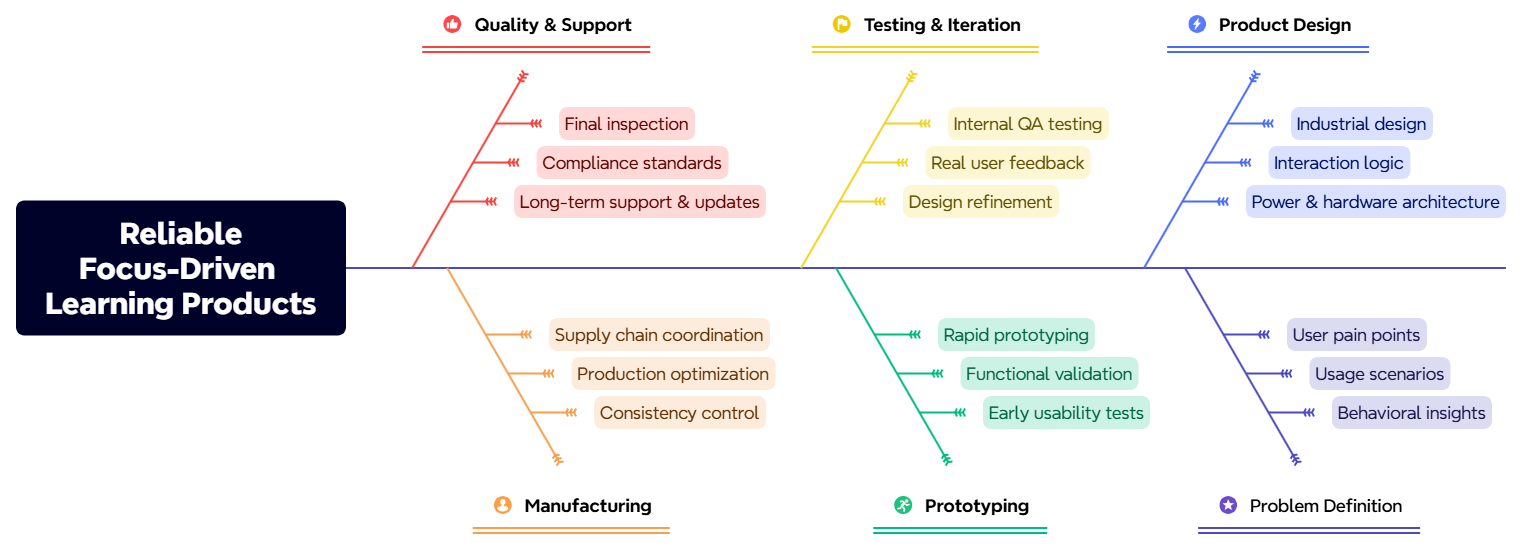
How We Build Our Products
Our products are developed through a practical, engineering-led process focused on reliability and real-world use.
We start with problem-driven design, followed by rapid prototyping and internal testing.
User feedback informs each iteration before moving into production and quality control.
This hands-on approach allows us to continuously improve our products while maintaining long-term support and consistency.
Quality, Compliance & Standards
Hobi products are designed to meet international safety and compliance standards, including CE, FCC, and RoHS requirements.
Each device undergoes internal testing and quality checks to ensure stable performance, durability, and safe operation across different regions.

Serving Customers Worldwide
Our products are used by customers across multiple countries and regions.
We provide ongoing product support, firmware updates, and clear documentation to ensure a reliable experience long after purchase.
